
Attic Insulation: How Much Is Actually Enough?
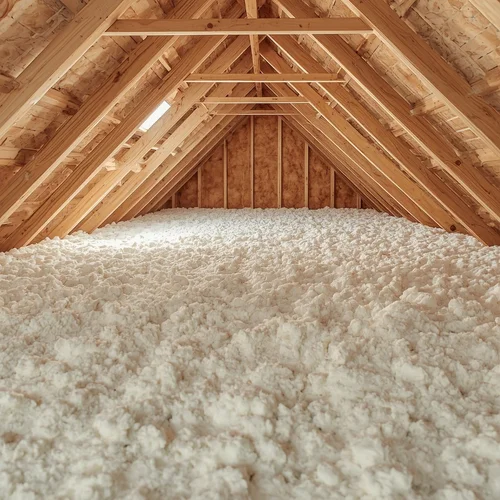
Quick Answer: Attic insulation is measured by R-value — its resistance to heat flow — and most homes need a high R-value in the attic, which translates to a deep, even layer of insulation (commonly somewhere around 14 or more inches of blown insulation, depending on the material and climate). A quick visual test: if you can see the ceiling joists, you almost certainly need more. Insulation should be deep, even, and gap-free across the whole attic floor. Older homes often fall short. Adding to an inadequate attic is one of the highest-return energy upgrades.
The attic is where a home loses the most heat, so it's the place where insulation matters most — and also the place most homes come up short. The tricky part is knowing how much is actually enough, since "some insulation" and "enough insulation" are very different things. The good news is you don't need to be an expert to get a sense of where you stand. A quick look in the attic, plus an understanding of what the right amount looks like, tells you whether adding more would pay off.
Insulation Is Measured in R-Value
Insulation performance is measured in R-value, which is simply its resistance to heat flow — the higher the R-value, the better it slows heat from passing through. The right amount of attic insulation is expressed as a target R-value, and most homes need a fairly high one in the attic because that's where heat escapes fastest. R-value is what matters, but for a homeowner, the practical translation is depth: reaching a high R-value means a deep layer of insulation. So while the technical measure is R-value, what you're really checking in the attic is whether there's enough material, deep and even, to hit it.
What "Enough" Looks Like in the Attic
In practice, an adequately insulated attic has a thick, consistent blanket of insulation across the entire attic floor. For blown insulation, achieving a high R-value typically requires a substantial depth — often 14 inches or more, depending on the insulation type and your climate. The exact number depends on the material and how cold or hot your region gets, but the principle holds: it should be deep. A thin, compressed, or patchy layer isn't enough, no matter what it was rated, because performance depends on having the full depth in place everywhere.
The Easiest Test: Can You See the Joists?
You don't need tools to get a strong first read. Look across your attic floor. If you can see the tops of the ceiling joists — the wooden framing members — sticking up above the insulation, you almost certainly don't have enough. In a properly insulated attic, the insulation rises well above the joists, burying them under a deep, even layer. Joists peeking out, thin spots, gaps, and uneven coverage are all clear signs that the attic is under-insulated and would benefit from more. It's one of the simplest home checks with a meaningful payoff.
| What you see in the attic | What it means |
|---|---|
| Joists visible above insulation | Not enough — add more |
| Thin, compressed, or patchy layer | Under-insulated; uneven performance |
| Deep, even layer burying the joists | Likely adequate |
| Gaps, bare spots, or missing areas | Coverage problems to fix |
Why Even, Gap-Free Coverage Matters
Depth is only half the equation — coverage is the other half. Insulation works as a continuous blanket, so gaps, bare spots, and unevenness create weak points where heat escapes, regardless of how deep the rest is. A pile of insulation in the middle of the attic with thin edges doesn't perform like an even layer of the same average depth. That's why proper attic insulation is installed to a consistent depth throughout the floor, with attention to tricky spots like eaves and around penetrations. And because air leaks let air bypass the insulation entirely, air sealing the attic before adding insulation is what allows the new material to perform.
Before adding attic insulation, have the air leaks sealed first. Insulation laid over open gaps around the attic hatch, recessed lights, and pipe penetrations lets conditioned air slip right past it — sealing first, then building the insulation up to a deep, even layer, is what delivers the full benefit.
Frequently Asked Questions
Attic insulation is measured in R-value, and most homes need a high R-value in the attic, which translates to a deep, even layer of material — often around 14 inches or more of blown insulation, depending on the insulation type and your climate. The exact target varies by region and material, but the principle is consistency and depth: a thick, even blanket across the whole attic floor. A professional can identify the right target for your specific home and climate.
The simplest test is to look at the ceiling joists. If you can see the tops of the joists sticking up above the insulation, you almost certainly need more. In a well-insulated attic, the insulation rises well above the joists in a deep, even layer that buries them. Thin spots, gaps, patchy coverage, and compressed insulation are also signs that it's inadequate. If your attic shows any of these, adding insulation would likely improve comfort and lower bills.
R-value is the measure of insulation's resistance to heat flow — how well it slows heat from passing through. The higher the R-value, the better the insulation performs. The recommended amount of attic insulation is expressed as a target R-value, which depends on your climate and the insulation material. For homeowners, the practical translation of a high R-value is depth: reaching the right R-value means having a deep, even layer of insulation in the attic.
Yes, significantly. Insulation works as a continuous blanket, so gaps, thin spots, and uneven coverage create weak points where heat escapes, no matter how deep the rest is. A deep pile in the center with thin edges won't perform like an even layer. That's why proper insulation is installed to a consistent depth across the entire attic floor, including tricky areas like the eaves. Even, gap-free coverage is as important as overall depth.
Yes. Air leaks let air bypass insulation entirely, so insulation laid over unsealed gaps — around the attic hatch, recessed lights, and pipe or wiring penetrations — underperforms because conditioned air slips right past it. Sealing those leaks first, then adding insulation to a deep, even layer, is what lets the new material actually do its job. Air sealing and insulation work together, and doing the sealing first is the right sequence for the best result.
Deep, Even, and Sealed Is the Goal
How much attic insulation is enough comes down to R-value, and in practice, that means a deep, even, gap-free layer across the whole attic floor — often 14 inches or more of blown insulation, depending on material and climate. The quickest check is the joists: if you can see them, you need more. It's a five-minute look that tells you most of what you need to know. Coverage matters as much as depth, and sealing air leaks first is what lets the insulation perform. Get the depth, the evenness, and the air sealing right, and the attic stops being the home's biggest source of heat loss and becomes its strongest line of defense in both summer and winter. Since the attic is where homes lose the most heat, getting this right is one of the highest-return improvements you can make. A modest investment in bringing the attic up to a full, even depth often does more for comfort and energy bills than far larger projects elsewhere in the house, which is why it's usually the first place worth addressing.
Can you see your attic joists? — Get your attic air-sealed and insulated to the right depth by a homeowner-focused team. Airflow Pro Insulation serves St. Joseph, Savannah, Country Club. Call (816) 344-6516.
