
Signs of Moisture Problems in Your Insulation (7 to Catch Early)
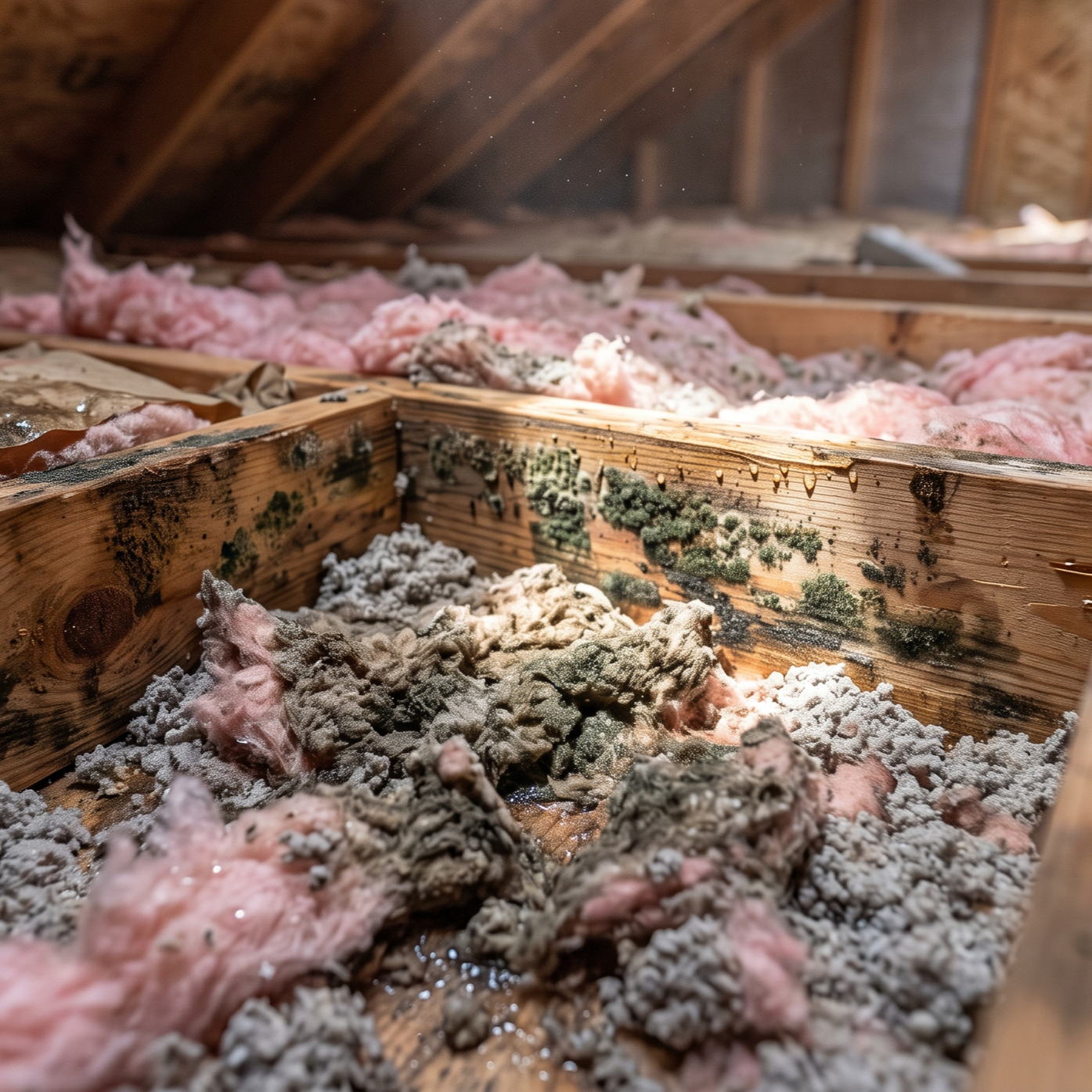
Insulation only works because it is mostly air. The fluffy fiberglass, the loose cellulose, the dense mineral wool, all of it is designed to trap millions of tiny still-air pockets, and those trapped pockets are what slow the flow of heat through your walls and attic. When water gets into that material, it fills those pockets and pushes the air out. The moment that happens, the insulation stops doing the one thing you installed it to do.
Quick Answer: Wet insulation stops insulating because water displaces the trapped air that does the actual work, and over time, it breeds mold and rots wood framing. The clearest warning signs are a musty smell, staining or sagging insulation, condensation or frost on the roof deck, and rising energy bills. Find and fix the moisture source first, dry the cavity out, then replace any insulation that stayed wet.
This is a problem worth catching early, because moisture damage tends to compound. A little dampness cuts efficiency, which drives up bills. Left alone, that same dampness grows mold on framing and softens wood until it rots. Below are the signs homeowners actually notice, what tends to cause them, and how to tell a one-time leak from an ongoing ventilation problem you need to solve at the source.
Why Water Wrecks Insulation in the First Place
Think of a dry batt of insulation like a wool sweater on a cold day. The wool keeps you warm, not because the fibers themselves are special, but because they hold a layer of still air against your skin. Now soak that same sweater and pull it back on. It is heavy, cold, and useless because the water has replaced the air, and water pulls heat out of you far faster than air ever could.
Insulation behaves the same way. Once water floods those air pockets, the damp section no longer slows heat the way the surrounding dry material does, and heat moves through that spot far more freely than the design intended.
The second problem is biological. Damp cellulose, wet paper facing, and moist wood framing are exactly what mold needs to grow. Give it a few days of sustained moisture, and you get the musty colonies people find on rafters and joists. Keep wood wet long enough and the fungi that cause rot move in, quietly weakening the framing that holds your roof and floors up. So wet insulation is really two failures at once: it stops insulating, and it starts feeding decay.
The Signs You Can Actually See and Smell
Most moisture problems announce themselves well before the framing is at risk. Here is what to look for and sniff for when you put your head into the attic, crawlspace, or basement.
A musty, earthy smell- This is often the first clue, and the most reliable. A clean, dry attic smells like dust and wood. A damp one smells like a wet basement or an old tent packed away, still wet. That odor means moisture has been present long enough for microbial growth to begin.
Staining, discoloration, or sagging- Dry batts sit up plump and even. Wet insulation slumps. Look for batts that have compressed, drooped away from the framing, or developed dark, rusty streaks and blotches. Blown-in insulation that has taken on water looks matted and packed down rather than light and fluffy, and it may have a crusted surface.
Condensation or frost on the underside of the roof- On a cold morning, shine a light on the roof sheathing above the insulation. Beads of water, a damp sheen, or a layer of frost on those boards mean warm indoor moisture is reaching a cold surface and giving up its water there. When that frost thaws, it drips down onto the insulation below.
Mold on framing or paper facing- Fuzzy or speckled growth on rafters, joists, or the kraft-paper face of a batt is a direct sign of a moisture load that has lasted. This is a handling hazard, not just a cosmetic one, which is covered further down.
Water stains on the ceilings below- You do not always have to go up top. Yellow-brown rings or blistered paint on an upstairs ceiling often mean water has been sitting in the insulation above it. A room that feels persistently clammy or humid, or air that feels heavier in one part of the house, points in the same direction.
Rising energy bills- When R-value quietly drops, your furnace and air conditioner must run longer to hold the same temperature. A heating or cooling bill that has crept up without an obvious change in weather or rates can be a sign that insulation is no longer performing, sometimes because it is wet.
Where the Water Is Coming From
Spotting wet insulation is only half the job. To fix it for good, you have to know why it got wet, and the causes fall into two broad camps: leaks and condensation.
Leaks are the obvious ones. A roof that has lost a shingle or flashing, a plumbing line running through a wall or ceiling, an ice dam backing water under the shingles in winter, all of these dump liquid water directly onto insulation. Rising damp is the crawlspace version, where moisture wicks up out of bare soil and saturates the insulation and framing above.
Condensation is sneakier, and it is where the problem's two-sided nature shows up. In winter, warm humid air from inside the house, from showers, cooking, and simple breathing, leaks up into a cold attic and condenses the instant it hits the cold roof deck. In a muggy summer, the direction can flip: warm, moisture-laden outdoor air finds its way into a cooler cavity, such as an air-conditioned wall or a cool crawlspace, and sheds its water there. Either way, the trigger is the same: humid air meeting a surface cold enough to pull the moisture out of it. Common drivers include poor attic ventilation that lets moist air stagnate, a missing or improperly installed vapor barrier, exhaust fans routed the wrong way, and air leaks that carry conditioned indoor air up into cold cavities. Several of those culprits are worth their own look.
Why the Cause Behind the Wetness Decides the Fix
A leak and a condensation problem get solved in completely different ways, and mistaking one for the other wastes money. Patch a roof that was never leaking, and you will be back in the attic next season, wondering why the insulation is wet again. A one-time leak is an event you repair once. Condensation is a recurring condition tied to how air and moisture move through the house, and it returns every time the weather that triggers it comes back, whether that is a cold snap or a stretch of summer mugginess. The FAQ below on telling a leak stain from a condensation problem covers how to read the pattern of the wetness itself, so before you spend on any repair, you can be honest about whether you are chasing a hole or a habit.
What to Do About It, in the Right Order
The sequence matters as much as the steps.
First, find and stop the moisture source. Repair the roof or the plumbing leak, seal air leaks that carry humid air upward, redirect any exhaust fan that vents into the attic so it discharges outside, and address ground moisture in the crawlspace. If you skip this and go straight to replacing insulation, the new material simply gets wet too.
Second, dry the space out. Insulation and framing need to return to a normal moisture level before anything gets closed back up, or you seal the dampness in.
Third, replace what is ruined. Insulation that grew mold or stayed soaked has to come out. Whether a given section can be salvaged or has to be pulled depends largely on the material. New material goes in only after the cavity is dry.
Fourth, fix the conditions that let it happen. That usually means improving attic ventilation so moist air can escape, and correcting vapor control so indoor humidity is not driven into cold cavities in the first place. This last step is what keeps the problem from simply returning next season.
A Note on Safety
Disturbing wet, moldy insulation is not a bare-hands job. Mold spores and loose insulation fibers become airborne the moment you start pulling material out, and both are irritants you do not want to breathe or get on your skin. At a minimum, that means a properly rated respirator, eye protection, gloves, and clothing you can wash or discard. Attics and crawlspaces also carry their own hazards: unstable footing between joists, low clearance, wiring, and poor ventilation in the heat. If the affected area is large, if mold is widespread, or if you suspect the framing has been compromised, bring in a professional to assess it. A trained crew can identify the moisture source, evaluate the extent of the damage, and handle removal safely, rather than leaving you to guess whether the problem is solved.
Frequently Asked Questions
It depends on the material. Some fiberglass can regain much of its R-value if it dries fully and quickly, because the glass fibers themselves do not absorb water. Blown cellulose is a different story: once it gets wet, it tends to mat down and stay compressed even after it dries, and compressed insulation has permanently lost loft and performance. Any insulation that grew mold or held water long enough to rot its paper facing should be replaced regardless of material, because drying does not undo mold growth or structural decay.
That frost is warm, moist indoor air that leaked up into the cold attic and froze the instant it touched the cold sheathing. When a warm spell arrives and the frost thaws, it drips down onto the insulation below, which is how attics get soaked without a single drop of rain getting in. The important takeaway is diagnostic: frost on the sheathing points to air leaks and weak attic ventilation, not a roof leak, so the fix is sealing and venting rather than reshingling.
Yes, and it is one of the more common hidden causes. A bathroom exhaust fan is supposed to duct all the way out through the roof or an exterior wall. When the duct instead just dumps into the attic, or was never connected to an outside vent, every shower sends a plume of warm, humid air straight onto the insulation and roof deck. Because it happens out of sight, homeowners often chase a phantom roof leak for months before discovering the fan was the culprit all along.
A vapor retarder is meant to face the warm-in-winter side of the assembly, so it blocks indoor humidity from migrating into the cold cavity where it would condense. When it is installed correctly, it keeps that moisture out of the insulation. When it is on the wrong side, or when a second vapor barrier is added on top of an existing one, it can trap moisture inside the wall or ceiling instead of keeping it out, which makes the problem worse rather than better. Wrong-side vapor control is a genuine cause of hidden wet insulation, not just a detail.
A leak leaves a localized mark: a defined ring or streak that lines up with a roof penetration or a pipe directly above it, and it usually appears in step with rain. A condensation problem is diffuse. It shows up as widespread dampness, frost, or mold across an entire cold surface, and it tends to occur with cold mornings or humid weather rather than rainfall. In short, one source overhead points to a leak, while wetness distributed across everything cold points to condensation.
It does, and by more than most people expect. Water conducts heat far better than the still air that insulation relies on to slow heat flow, so a soaked batt can shed most of its rated R-value while it remains wet. Heat then passes through that section almost as if the insulation were missing, forcing your heating or cooling system to run longer to hold the temperature. Until the cavity is dried out or the ruined material is replaced, that lost performance shows up month after month on the bill.
Schedule a moisture and insulation inspection — catch damage before it spreads to your framing and your energy bills. Airflow Pro Insulation serves St. Joseph, Savannah, Country Club, and the surrounding area. Call (816) 344-6516 for a free assessment.
