
Radiant Barrier Explained: The 4 Times It Actually Pays Off
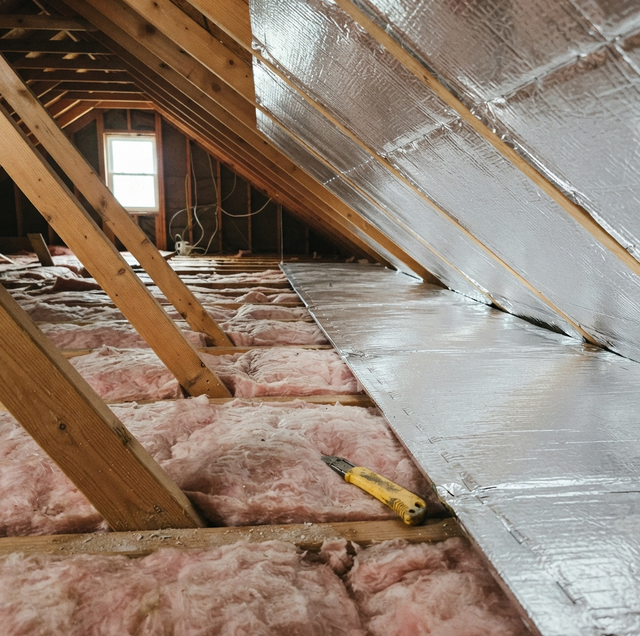
A stuffy upstairs bedroom on a bright afternoon, a garage that feels like an oven, an air handler working overtime while the attic above it bakes: these are the complaints that send homeowners looking for a radiant barrier. The product itself is simple: a shiny sheet of foil in the attic, but the physics behind it decides whether it helps you or adds a reflective layer that does nothing. Understanding what it actually blocks is the difference between a smart upgrade and a wasted afternoon.
Quick Answer: A radiant barrier is a reflective foil installed in the attic that reflects radiant heat from the hot roof back outward instead of letting it soak into the living space. It reduces summer heat gain but does not add meaningful R-value, so it complements insulation rather than replacing it.
The Three Ways Heat Moves Through a House
Before the foil makes sense, the heat has to. Heat travels three ways, and each one calls for a different defense.
Conduction is heat moving through solid material, the way a metal spoon warms up in a hot bowl of soup. In a house, the sun heats the roof deck, and that warmth conducts down through the framing and any material touching it.
Convection is heat carried by moving air. Hot air rises, cool air sinks, and a poorly sealed attic lets that circulation drag warmth wherever it wants to go.
Radiation is heat traveling as invisible infrared energy across open space, no contact and no air required. A hot roof deck radiates that energy downward into the attic, and any surface it lands on- insulation, ductwork, the ceiling below- absorbs it and warms up.
Regular fiberglass or cellulose insulation is built to slow conduction. Its rating, R-value, measures resistance to conductive heat flow, and it does that job well. What batts and blown-in insulation do poorly is stop radiant energy crossing the open air of the attic. That gap is exactly where a radiant barrier goes to work. It targets the radiation piece, the one mode traditional insulation was never designed to handle.
What a Radiant Barrier Actually Does
A radiant barrier is a low-emissivity material, almost always a thin aluminum foil bonded to a backing like kraft paper, plastic film, or oriented strand board. Two properties make it effective. It reflects most of the radiant heat that strikes it, and it emits very little of its own. A quality barrier reflects roughly 95 to 97 percent of the radiant energy hitting it, meaning only a small fraction passes through as heat.
Here is the mechanism. The sun heats the roof, the roof deck radiates infrared downward, and the foil surface bounces the majority of that energy back toward the roof instead of letting it reach the insulation and ceiling below. Less radiant energy absorbed means a cooler attic and less heat pushing down into the rooms you live in.
One detail is non-negotiable: the reflective face must sit next to an air gap. A radiant barrier only reflects when the shiny surface faces open air, typically a half-inch or more. Press that foil flat against insulation or sheathing and its reflective property essentially shuts off, because reflectivity depends on the air space in front of it. This single requirement is why installation placement matters so much and why a barrier laid directly on top of attic insulation often underperforms.
Where It Goes in the Attic
There are two common ways to get a radiant barrier into a home, and both keep the reflective face pointed at an air gap.
Stapled to the rafters: An installer attaches foil sheeting to the underside of the roof rafters, reflective side facing down into the attic. This positions the barrier to intercept radiant heat coming off the roof deck before it reaches the attic floor. The open attic volume provides the air gap the foil needs.
Foil-faced sheathing: In new construction or a reroof, the roof decking itself can be a panel with a factory-applied radiant barrier laminated to its underside. The reflective layer faces the attic, doing the same job without a separate stapling step.
A third approach, laying foil flat over the attic-floor insulation, exists but carries a serious drawback covered below. The rafter and sheathing methods keep the foil vertical or angled where dust settles less easily, which protects its long-term performance.
Why It Complements Insulation but Never Replaces It
A radiant barrier and R-value insulation are not competitors. They handle different modes of heat transfer, and a well-built attic wants both.
Insulation slows conductive heat, the warmth that creeps through solid materials and lingers. A radiant barrier reflects radiant heat, the infrared that crosses open air. Remove the insulation and rely on foil alone, and conductive heat, especially the winter heat loss escaping upward through your ceiling, moves freely. A radiant barrier adds little to no R-value, so it cannot stand in for the batts or blown-in that keep conditioned air where it belongs.
The right mental model treats the barrier as a first line of defense that shaves peak heat gain off the top, while insulation carries the steady, year-round load. Think of the foil as a sun visor and the insulation as the wall of the house: the visor cuts glare, but you still need the wall.
When a Radiant Barrier Helps Most
The payoff is largest under a specific set of conditions, and it is worth being honest about them.
A radiant barrier earns its keep when the attic runs hot, and something valuable sits inside it. If your HVAC ductwork, air handler, or the equipment itself lives in the attic, a cooler attic means those ducts pick up less heat on the way to your rooms, and the system works less to keep up. Homes with living space directly under the roof, like a finished bonus room or an upstairs that always runs warm, feel the difference more than a home with a large buffer attic.
The benefit is fundamentally a summer, cooling-season benefit. A radiant barrier mainly cuts heat gain, the unwanted warmth trying to get in when the sun is beating down. That makes it far more useful against heat than against cold. In a home dominated by heating needs, where the concern is keeping warmth in rather than blocking it out, a radiant barrier offers much less, because reflecting infrared away from the living space is the opposite of what a cold-weather household wants from its attic. The upgrade shines where cooling loads are high and does relatively little where the heating season dominates the energy bill.
When It Does Little, and the Dust Problem
Two situations blunt a radiant barrier's value, and both deserve a clear-eyed look before you spend on one.
The first is a heating-dominated home, described above: less radiant heat gain to reflect means less to gain from reflecting it.
The second is dust. A radiant barrier laid horizontally over attic-floor insulation collects dust over time, and dust is the enemy of reflectivity. A layer of grime on the foil raises its emissivity and drops its reflective performance, sometimes dramatically within a few years. A horizontal barrier that looked great on day one can quietly lose much of its effect as it grays over. This is the strongest argument for the rafter-mounted approach, where the foil sits angled or vertical and sheds dust far better than a flat sheet on the attic floor.
Mount the foil on the rafters, angled or vertical, rather than laying it flat over attic-floor insulation. A horizontal sheet collects dust, and grimy foil can lose much of its reflectivity within a few years, while a rafter-mounted barrier sheds dust and holds its performance far longer.
Installation Cautions and Realistic Expectations
Getting a radiant barrier to perform and be safe comes down to a handful of details.
Face an air space: The reflective side must face an air gap. Sandwich it against another surface and it stops reflecting.
Keep it clean, and keep it clear of electrical: Foil is conductive, so it must stay away from exposed wiring, junction boxes, and recessed can lights that are not rated for contact. Draping a conductive sheet over live electrical is a genuine shock and fire hazard, and manufacturer clearances around heat-producing fixtures exist for a reason.
Radiant barrier foil is conductive. Keep it away from exposed wiring, junction boxes, and recessed can lights that are not rated for contact, since draping a conductive sheet over live electrical is a real shock and fire hazard. Honor the manufacturer clearances around heat-producing fixtures.
Work with your ventilation, not against it: A radiant barrier performs best in an attic that still breathes. Blocking soffit vents or ridge vents with foil traps heat and moisture, so the barrier and the attic's airflow path have to coexist.
Mind what is already up there: Attics are hot, cramped, and full of fall hazards, with heat exposure that turns dangerous fast in the summer. Insulation in older homes can contain asbestos or vermiculite, which must be tested before anything disturbs it. Personal protective equipment is not optional.
For all these reasons, this is a job that rewards a professional installer who will nail the air gap, honor the electrical clearances, and preserve ventilation. Set your expectations accordingly: a radiant barrier trims peak cooling loads and can make a hot upstairs more livable, but it is one layer in a system, not a magic fix that replaces good insulation and air sealing.
Frequently Asked Questions
Roof color and material change how hot the deck gets, but the barrier reflects radiant heat regardless of what is above it. Dark asphalt shingles can push roof-deck temperatures past 150 degrees Fahrenheit on a sunny day, giving the barrier more radiant load to reject. The foil does the same job under any roof; the hotter the deck, the more there is to reflect.
Stacking two barriers gains you almost nothing. Radiant reflection happens at the first low-emissivity surface the heat meets, so a second layer behind it has no fresh radiant energy to reflect. If an old barrier has degraded from dust or damage, the better move is to remove or replace it rather than layer a new sheet on top.
It can if it blocks airflow or traps vapor against a cold surface. Perforated radiant barriers exist specifically for this reason, with tiny holes that let water vapor pass through while still reflecting heat. Choosing a perforated product for the rafters and keeping soffit and ridge vents unobstructed prevents the trapped-moisture issue that a solid, poorly placed sheet can create.
The aluminum itself does not wear out and can last the life of the roof, often several decades. What degrades is surface cleanliness: a dust-coated horizontal barrier can lose a large share of its effectiveness within three to five years, while a rafter-mounted foil that stays clean holds its performance far longer. Longevity is really a question of placement and dust exposure, not material failure.
Yes, and an attached garage or detached shop with a hot roof is often an ideal candidate. These spaces frequently lack full insulation and cooling, so reflecting radiant heat off the underside of the roof can drop the working temperature by several degrees on a hot afternoon. The same air-gap and electrical-clearance rules apply.
Absolutely, and the two work as a team. The barrier reflects radiant heat, but any warmth that still builds in the attic air needs a way out, which is the job of soffit, ridge, and gable ventilation. Removing or blocking vents to make room for foil undercuts both systems and can raise attic temperatures instead of lowering them.
Find out whether a radiant barrier fits your attic — a quick assessment tells you if reflective foil will actually cool your home or just sit there. Airflow Pro Insulation serves St. Joseph, Savannah, and Kansas City. Call (816) 344-6516.
