
What Is R-Value? The Number That Decides Your Comfort
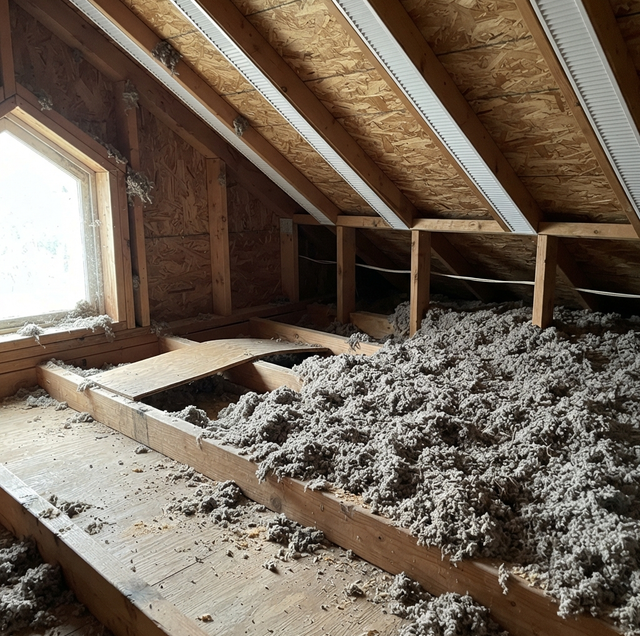
If you have ever stood in a home-improvement aisle staring at insulation packaging, you have seen the letter R stamped everywhere: R-13, R-30, R-49. It is the single most important number in the insulation world, and it is also the one most people nod along to without really knowing what it measures. Getting comfortable with R-value is the difference between buying the right amount of insulation once and paying to heat or cool a house that leaks warmth all year.
Quick Answer: R-value measures how well a material resists heat flow. A higher R-value means heat moves through it more slowly, so the material insulates better. The amount you need depends on your climate zone and which part of the house you are insulating, with the attic almost always requiring the most.
What R-Value Actually Measures
Heat is restless. It constantly moves from warmer areas toward cooler ones, and it does not care which direction that is. In winter, the warmth you paid for wants to escape a cozy room into the cold outdoors. In summer, the opposite happens: heat from a baking roof and hot outside air pushes inward toward your air-conditioned rooms. R-value is a rating of how strongly a material fights that movement in either direction.
The R stands for resistance, specifically thermal resistance. The higher the number, the harder it is for heat to pass through. A material rated R-30 slows heat transfer far more than one rated R-13. That is the whole concept in one sentence, and everything else is just detail built on top of it.
A useful way to hold onto the idea: R-value is to heat what a dam is to water. A taller, thicker dam holds back more water for longer; a low earthen berm barely slows a trickle. Insulation works the same way against the flow of heat. It never stops the flow completely, but a higher R-value holds it back long enough that your heating and cooling equipment can keep up without running constantly.
Because R-value works against heat moving in both directions, better insulation pays off in every season. The same attic that keeps expensive warm air inside during a cold snap also blocks attic heat from radiating down into bedrooms during a heat wave. It is not a cold-weather product or a hot-weather product; it is a heat-control product.
R-Values Add Up in Layers
One of the most practical facts about R-value is that it stacks. When you place one insulating layer over another, their R-values add together. A layer of R-19 batt beneath a fresh R-30 blanket of blown material gives you roughly R-49 combined. This is exactly how contractors reach the high numbers recommended for attics: they build up thickness in layers rather than searching for one miracle product.
This additive quality is also why topping off existing attic insulation is such a common upgrade. If an attic already holds a thin, settled layer, adding more on top raises the total rather than starting from zero, as long as the old material is dry, clean, and not hiding a moisture or pest problem underneath.
R-Value Per Inch of Common Materials
Different materials pack a different amount of resistance into each inch of thickness. Knowing the rough R-value per inch helps you understand why a spray foam job can be thin while a blown-in attic looks like a deep snowdrift. Product formulations vary, so treat these as general working figures rather than exact spec-sheet values.
Fiberglass batt: The familiar pink or yellow rolls deliver roughly R-3.1 to R-3.4 per inch. Batts are inexpensive and simple in open framing, but they only perform when they fill the cavity completely with no gaps or compression.
Blown cellulose: Made largely from recycled paper fiber treated for fire and pests, blown cellulose runs about R-3.2 to R-3.8 per inch. It settles into odd spaces and around obstructions well, which makes it a workhorse for attic floors.
Blown fiberglass: Loose-fill fiberglass blown into an attic lands near R-2.2 to R-2.7 per inch. It resists settling over time and is light on ceiling framing, though it typically needs a bit more depth to hit a target than cellulose does.
Open-cell spray foam: This softer, sponge-like foam gives roughly R-3.5 to R-3.6 per inch and expands aggressively to seal gaps. It air-seals as it insulates, but its lower per-inch value means it needs more thickness for a high R target.
Closed-cell spray foam: The dense, rigid version is the heavyweight at around R-6 to R-7 per inch, the highest of the common options. It also blocks air and slows moisture, which is why it shows up in tight spaces and rim joists where depth is limited.
How Much R-Value Each Part of the House Needs
R-value targets are not one-size-fits-all across a home. Different surfaces face different amounts of heat pressure and have different amounts of room to work with, so recommended levels split by location.
Attic: The attic almost always calls for the most insulation, frequently in the R-38 to R-60 range depending on where you live. Because it sits directly under the roof and heat rises, the attic is the single biggest path for heat to escape in winter and pour in during summer. It also has open floor space, so building deep coverage there is both the most effective and the most affordable upgrade per dollar.
Walls: Exterior walls are usually limited by the depth of the studs, so wall targets commonly fall in the R-13 to R-21 range. You cannot simply add more depth without rebuilding, which is why dense-pack and foam products that maximize R-value inside a fixed cavity matter most here.
Floors and crawl spaces: Floors over unconditioned spaces and crawl space assemblies typically aim somewhere around R-19 to R-30. The goal is to stop the cold or humid buffer below from stealing comfort from the rooms above, paired with moisture and air control appropriate to that damp environment.
Why Attic Levels Run So High
It is worth pausing on why the attic number dwarfs the others. Heat rises, and the attic is the top of the thermal envelope, so it takes the full brunt of escaping warmth in cold weather. In hot weather, a sun-struck roof can drive attic temperatures far above the outdoor air, and all of that heat presses down toward the living space. Because the attic sits between the harshest temperatures and your bedrooms, every added inch there returns more comfort than the same inch almost anywhere else in the house. High recommended attic levels are simply a response to it being the busiest highway for heat.
Compressed or Gappy Insulation Loses R-Value
Here is the catch that trips up many DIY jobs: a material only delivers its rated R-value when it is installed at full loft with complete, even coverage. R-value depends on the tiny air pockets trapped inside the material, and anything that crushes those pockets or leaves openings drops real-world performance below the number on the label.
Stuff an R-19 batt into a cavity meant for R-13 and jam it flat, and you do not get R-19. Compressing it reduces the trapped air and can leave you closer to R-13 or less. The same loss happens when batts are cut short, when they bulge around wiring instead of being split neatly around it, or when blown material is spread too thin in the far corners of an attic. Gaps are even worse than compression, because heat races through an uninsulated slot far faster than it creeps through insulation. Even coverage at the correct depth is what turns a label number into actual savings.
Insulation only delivers its rated R-value at full loft with even coverage. Do not jam an R-19 batt into a cavity built for R-13, cut batts short, or let them bulge around wiring, and do not spread blown material thin in the far corners of an attic. Gaps hurt even more than compression, since heat races through an uninsulated slot.
Air Sealing Has to Go With R-Value
R-value only rates resistance to heat conducting through a material. It says nothing about air leaking around that material, and air leakage is a separate, sneaky drain on comfort. An attic can be piled deep with insulation and still perform poorly if the ceiling below is full of gaps around light fixtures, plumbing chases, the attic hatch, and top plates. Warm air rushes up through those openings, carries heat straight past the insulation, and the expensive blanket ends up guarding a leaky floor.
The fix is to air seal before or alongside adding R-value. Sealing the penetrations in the attic floor stops the air current, and the insulation on top can then do the job it was rated for. Insulation and air sealing are partners; adding one without the other leaves comfort and efficiency on the table.
How Climate Zone Shifts the Target
The reason there is no universal magic number is climate. National energy guidance divides the country into climate zones, and the recommended R-values climb as the climate gets more demanding. Colder regions with long, hard winters call for higher attic and wall targets because heat wants to escape for more of the year. Milder regions carry lower recommended levels because the equipment does not fight extreme temperatures as often.
Hot climates deserve strong attic insulation too, just for the opposite reason: keeping relentless solar heat out of the living space. That is another sign R-value is season-neutral. The same zone map that pushes a cold region toward a high attic number also pushes a hot region there, because both are fighting a large temperature gap for much of the year. Recommended levels vary by zone and by local building code, so confirm the exact target for your area before you buy.
A Note on Safety Before You Start
Older insulation and loose vermiculite-style materials can contain asbestos, so do not rake, vacuum, or disturb questionable old insulation. Have it tested first and use licensed abatement if it is positive. Attic work adds its own risks: you can step through a ceiling between joists, and summer attic heat climbs to dangerous levels, so work with a respirator, a spotter, and ventilation.
Frequently Asked Questions
No, they are inverses of each other. R-value measures resistance to heat flow, so higher is better for insulation. U-factor measures how readily heat passes through an assembly, so lower is better. You will usually see U-factor on windows and doors and R-value on insulation. To convert, U-factor is roughly 1 divided by the total R-value of the assembly.
Yes, and it matters. Loose-fill materials can settle over years, losing depth and with it total R-value, which is one reason older attics underperform their original rating. Moisture is even more damaging: wet insulation conducts heat far better than dry insulation and can lose much of its effective R-value until it dries, besides risking mold. Keeping insulation dry is part of keeping its R-value intact.
Not usefully. R-value gains follow diminishing returns, meaning each added inch saves a little less energy than the inch before it. Going from R-0 to R-13 makes a dramatic difference; going from R-49 to R-60 makes a modest one. Past the recommended level for your zone, extra depth costs more than it returns, and in walls you run out of cavity space entirely. Hitting the target matters more than overshooting it.
Rigid foam boards run roughly R-4 to R-6.5 per inch depending on type, with polyiso at the high end. They are often installed as continuous exterior sheathing or on basement and crawl space walls, where their big advantage is covering the framing itself. Standard cavity insulation leaves the wood studs as thermal bridges, and a continuous board layer over the framing reduces that bridging in a way batts between studs cannot.
Yes, because they lack the open attic space that makes deep insulation easy. The framing depth is fixed, and there is little or no room for airflow above the insulation, so these assemblies often lean on higher-R-per-inch products like closed-cell foam to reach a target within a shallow rafter cavity. Proper venting or a correctly detailed unvented assembly is critical here to avoid trapping moisture against the roof deck.
No. A pricier product per inch is not automatically the better value for a given job. Closed-cell foam has the highest R-value per inch but costs the most, so for an open attic with unlimited depth, cheaper blown cellulose or fiberglass usually reaches the same total R-value for less money. Premium products earn their cost in tight spaces where depth is limited or where their air-sealing and moisture control solve a second problem at the same time.
Find out how much R-value your attic is really missing — a quick assessment turns guesswork into a clear plan for year-round comfort. Airflow Pro Insulation serves St. Joseph, Savannah, and Kansas City. Call (816) 344-6516.
