
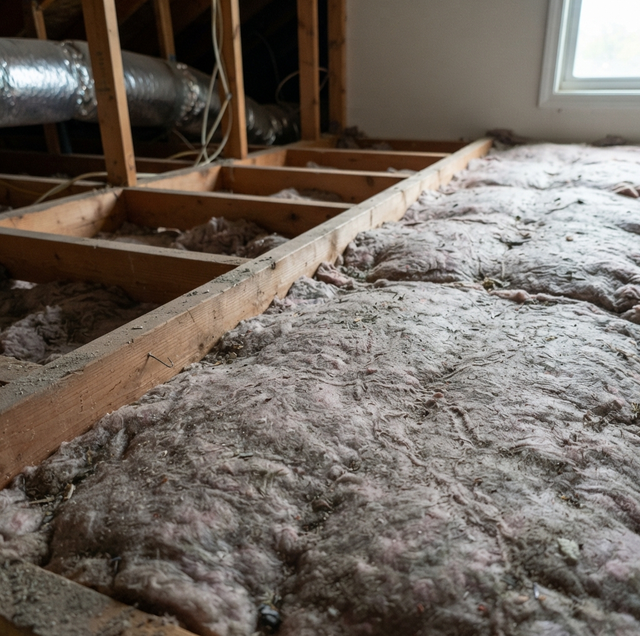
Quick Answer: Adding new insulation over old material is fine when the existing layer is dry, clean, and simply thin or settled. Full removal is required when the insulation is wet, moldy, contaminated by rodents, fire- or smoke-damaged, or when you find older vermiculite that may contain asbestos. The deciding factor is condition, not age alone.
You pull back the attic hatch expecting a fluffy blanket and instead find a flattened, gray layer with matted trails running through it. The question that follows is the practical one: does this need to come out, or can you just pile fresh insulation on top and be done? The answer depends entirely on what the old material has been through, because insulation fails in more than one way, and only some of those failures can be fixed by adding depth.
Why Insulation Stops Doing Its Job
Insulation works by trapping still air inside its fibers or cells, and anything that disturbs that trapped air lowers its R-value, the number that measures resistance to heat flow. That resistance is what keeps summer heat from pouring into the house through the ceiling and keeps winter warmth from escaping the same way. Both directions matter year-round, so a weakened attic layer costs you comfort and energy in every season, not just one.
Settling and compression: Loose-fill materials lose height over decades as gravity, foot traffic, and stored boxes pack them down. Once the fibers are compressed, the air pockets shrink, and the R-value drops with the depth. A layer that started at a solid rating can quietly lose a meaningful share of its performance without ever looking dramatically different. Settling on its own is usually the easy case, because clean, dry, settled insulation can often just be topped up.
Moisture saturation: Water is the enemy of every insulation type. A roof leak, a bathroom fan venting into the attic instead of outdoors, or condensation from warm indoor air hitting a cold surface can all soak the layer. Wet fiberglass and cellulose lose most of their insulating value because water conducts heat far better than trapped air does. Cellulose in particular can hold water like a sponge, stay damp long after the leak is fixed, and begin to break down and slump.
Mold and biological growth: Once organic material stays damp, mold follows. Cellulose is plant-based and especially prone to it, but dust and debris on any wet insulation can feed growth. Mold is a health concern and a sign the moisture problem was serious enough that the material can no longer be trusted. You cannot bake mold out of insulation, and covering it only traps the problem where you cannot see it.
Pest contamination: Attics are prime real estate for mice, rats, squirrels, and birds. They tunnel through loose fill, nest in it, and leave behind droppings and urine that soak in and linger. Beyond the smell, rodent waste is a contamination and odor source that fresh insulation on top will not neutralize. Nesting also flattens the material into useless mats and can leave chewed wiring behind, which is a separate hazard for a professional to assess.
Smoke, fire, and age: Insulation exposed to a fire or heavy smoke holds odor and soot deep in its fibers and should be removed rather than sealed over. And sheer age matters for one specific older product: loose, pebble-like vermiculite, common in homes insulated decades ago, may contain asbestos. That single case changes everything about how the job is handled.
Signs It Should Be Removed vs Topped Up
The fastest way to sort your situation is to separate cosmetic thinning from actual damage.
Lean toward topping up when the existing insulation is dry to the touch, free of odor, evenly colored, and simply shallower than it should be. Clean settled cellulose or intact fiberglass batts that are just thin are good candidates for a fresh layer blown or laid on top to build depth back up.
Lean toward full removal when you find any of the following: water stains or a damp, cold feel; a musty smell or visible mold; rodent droppings, nesting trails, or a strong ammonia odor; soot or a lingering smoke smell; or matted, crusted, deteriorating material that has lost its loft. In these cases, adding new insulation on top seals the damage in and wastes the new material, because the fresh layer sits on a compromised base and inherits its moisture, odor, and contamination.
If your loose fill is granular and pebble-like with a grayish or brownish sheen rather than fibrous, treat it as possible vermiculite that may contain asbestos. Do not disturb it, vacuum it, or pile anything on top. Have it lab-tested and, if positive, handled by a licensed abatement professional rather than a homeowner or a general insulation crew.
When Adding Over Old Insulation Is Fine
Building depth on top of sound existing insulation is a normal, cost-effective upgrade. Blown-in cellulose or loose fiberglass layers well over an existing bed, and unfaced batts can be laid over old batts as long as the new ones have no vapor facing that would trap moisture between layers. The rule is simple: the base must be dry, clean, and free of pests and mold. If it passes all of those, more depth directly raises the total R-value and the attic comes out ahead.
What topping up cannot do is fix a problem underneath it. If air is leaking, moisture is entering, or the roof deck is damp, adding insulation on top hides the symptom and can even make condensation worse by keeping the underside colder. So the "add on top" decision is really a "is the foundation sound" decision first.
Why Air-Sealing Comes Before Re-Insulating
Here is where most attic projects go wrong. Insulation slows heat moving through a surface, but it does very little to stop air from leaking through the gaps around wiring, plumbing, light fixtures, and wall top plates. A house with great R-value and leaky penetrations still loses conditioned air constantly, and worse, that escaping indoor air carries moisture into the attic where it can condense and re-wet whatever you just installed.
That is why sealing those gaps comes first, while the deck is exposed and the leaks are reachable. Insulation and air-sealing behave like a coat and a windbreaker: the coat holds warmth, but on a gusty day it is the thin shell that actually keeps the cold from cutting through. Do the sealing before the new insulation goes down, or you build the coat and skip the shell.
Seal the attic air leaks before the new insulation goes down, while the deck is exposed and the gaps around wiring, plumbing, light fixtures, and top plates are reachable. Insulation slows heat through a surface but does little to stop leaking air, and escaping indoor air carries moisture up where it can re-wet what you just installed.
One important caution here. Older knob-and-tube wiring was designed to shed heat into open air, and burying or compressing it under insulation can be unsafe. If you see ceramic knobs and cloth-wrapped wires, or recessed can-lights that are not rated for insulation contact, those areas need a professional to evaluate and, if necessary, correct before anything gets covered. This is not a place to improvise electrical work.
What Full Removal Actually Involves
Proper removal is a contained process, not a shop-vac afternoon. Crews seal off the work area and the attic access so contaminated dust, fibers, and droppings do not drift into living space. Old loose fill is pulled out with a commercial HEPA-filtered vacuum that captures fine particles the way a household vacuum cannot, and the material is bagged and hauled off. Batts are removed by hand and bagged the same way.
With the deck bare, the crew can inspect the framing for hidden moisture damage, seal the air leaks, address ventilation problems, and only then install the new insulation to the target depth. Doing it in that order means the new layer starts on a clean, dry, sealed surface instead of on top of the old problems.
Protect yourself if you are inspecting: Even just poking your head up to look, wear a properly fitted respirator rather than a paper dust mask, keep your weight on the joists, and do not stir up old loose fill. If anything looks like vermiculite, back out and leave it undisturbed for testing. The point of looking is to decide who does the work, not to start doing it.
Picking the Replacement Material
Once removal is done, choose fresh insulation for the space. Fiberglass batts suit open, evenly framed areas and are simple to lay. Blown-in cellulose flows into irregular spaces and around obstacles, making it a common attic choice for building even depth quickly. Spray foam does double duty as insulation and air barrier and is often reserved for rim joists, crawl space walls, and problem areas where sealing matters as much as R-value. Attics are generally insulated to a high R-value target because the ceiling is the largest heat-loss and heat-gain surface in the house, so more depth there pays off in both the hot and cold halves of the year.
Frequently Asked Questions
Clean, dry fiberglass does not chemically degrade with age the way some materials do, so decades-old batts that stayed dry and undisturbed can still perform close to their original rating. What changes their real-world value is physical disturbance: batts that were compressed by storage, pulled apart by pests, or dampened and dried repeatedly. So the honest test is condition and loft, not the year it was installed.
You can layer new over old, but the new batts must be unfaced, meaning no paper or foil vapor barrier on them. A vapor facing sandwiched between two layers can trap moisture and cause it to condense inside the assembly. Lay the new batts perpendicular to the old ones to cover the seams and gaps between the original pieces, which also reduces heat loss at those joints.
Vermiculite looks like small, hard, pebble-like flakes, often grayish-brown or with a slight silvery or gold shimmer, and it pours rather than clumps. Cellulose looks like gray shredded paper and fiberglass looks like spun cotton candy. If your loose fill is granular and mineral-like rather than fibrous, treat it as suspect vermiculite, leave it undisturbed, and have it lab-tested before anyone works around it.
Often yes, because rodent urine and droppings soak into loose fill and become an ongoing odor and contamination source that no amount of fresh insulation on top will mask. Removal clears out the nesting material and lets the crew find and note entry points and chewed wiring. Pairing removal with sealing the pests' access holes is what actually ends the cycle, rather than removal alone.
Reputable crews typically ask that the system be turned off during removal and that any nearby returns or ducts be covered, so airborne fibers and dust are not pulled into the ductwork and blown through the house. Running the blower during an active removal can distribute contaminants into rooms far from the attic. The system goes back to normal once the area is cleaned and the new insulation is in.
For a typical single-family attic, removal and re-insulation is often a one- to two-day job depending on square footage, how much contamination is present, and whether hidden moisture or wiring issues turn up once the deck is exposed. Removal itself is the slower half because of containment and vacuuming; blowing in the new layer goes relatively fast once the surface is clean, sealed, and inspected.
Book a free attic assessment — find out whether your old insulation should be topped up or fully replaced. Airflow Pro Insulation serves St. Joseph, Savannah, and Country Club. Call (816) 344-6516.
