
Why Your Energy Bills Are High in Both Summer and Winter
Quick Answer: If your energy bills spike in both summer and winter, the common cause is a leaky, under-insulated home losing the conditioned air you're paying for. In winter, heat escapes through the attic, walls, and gaps; in summer, outdoor heat pours in and your cool air leaks out. Either way the HVAC system runs constantly to keep up. The main culprits are too little insulation (especially in the attic), air leaks around the envelope, and an overworked system fighting both. Sealing air leaks and adding insulation cuts the waste in both seasons at once.
It's a frustrating pattern: the bill is high when it's hot and high again when it's cold, like the house finds a way to cost you money in every season. That back-and-forth is actually a clue. A home that's expensive to both heat and cool usually has one underlying problem working in both directions — it can't hold its conditioned air. Once you see it that way, the fix becomes clear, because the same improvements that keep heat in during winter keep it out during summer.
The Same Leak Costs You in Both Seasons
A comfortable home is a sealed, insulated box: you condition the air inside, and the envelope keeps it that way. When that box leaks — through gaps and insufficient insulation — you lose conditioned air year-round. In winter, the heat you paid for escapes, and cold air sneaks in, so the furnace runs and runs. In summer, the cool air leaks out and outdoor heat pushes in, so the AC runs and runs. It's the same weakness causing both bills. That's why high costs in both seasons point to insulation and air sealing rather than to the furnace or AC themselves.
Where the Money Goes
Not Enough Insulation
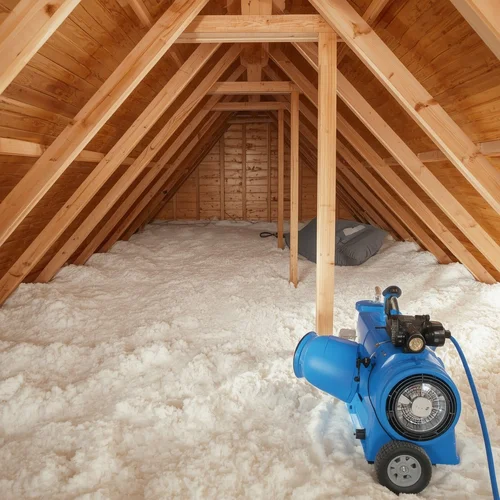
Insulation is the barrier that slows heat from moving through your ceiling, walls, and floors. Too little of it — especially in the attic, where heat rises and escapes first — lets warmth pour out in winter and lets a hot attic bake the house in summer. Under-insulation is one of the biggest reasons a home is expensive to condition in both seasons, and the attic is usually where it costs the most.
Air Leaks
Even with insulation, air leaks let conditioned air escape and outside air in. Gaps around attic hatches, recessed lights, plumbing and wiring penetrations, ductwork, windows, and doors all let air pass freely. These leaks work year-round, bleeding heated air out in winter and cooled air out in summer, and they're often overlooked because you can't always feel them.
An Overworked HVAC System
When conditioned air keeps escaping, the heating and cooling system never catches up, so it runs almost constantly. That nonstop operation drives up the bill and wears out the equipment. A system that seems to run all the time usually isn't undersized or broken — it's fighting a leaky, under-insulated envelope, and no amount of system runtime can fully win that fight.
| Where it goes | Winter effect | Summer effect |
|---|---|---|
| Too little attic insulation | Heat escapes upward | Hot attic radiates heat down |
| Air leaks in the envelope | Warm air leaks out | Cool air leaks out, hot air in |
| Under-insulated walls/floors | Heat transfers out | Heat transfers in |
| Overworked HVAC | Runs constantly, high bills | Runs constantly, high bills |
Why Sealing and Insulating Fixes Both at Once
The reason this problem is satisfying to fix is that one set of improvements solves both seasons. Sealing air leaks and adding insulation where it's lacking strengthens the envelope, helping the home retain its conditioned air, which keeps heat in during winter and out during summer. The HVAC system stops running constantly because it's no longer fighting a losing battle, so the bills drop in both seasons, and the equipment lasts longer. Air sealing and insulation, usually starting with the attic, are among the most effective ways to cut energy waste precisely because they work year-round. You're not buying a bigger system; you are fixing the box so the system you have can finally keep up. For a home that's been expensive to run in every season, that shift — from constantly losing conditioned air to actually holding it — is what finally brings the bills down and keeps them down.
Tackle the attic first and pair air sealing with insulation. Sealing the leaks where warm air escapes, then adding insulation on top, gives the biggest year-round return — and doing them together works far better than insulation alone, since insulation over open air leaks still lets conditioned air slip through.
Frequently Asked Questions
Because the same weakness costs you in both seasons: your home can't hold its conditioned air. With too little insulation and air leaks in the envelope, heat escapes in winter and outdoor heat pours in during summer, so your HVAC system runs constantly either way. A home that's expensive in both seasons almost always points to insulation and air sealing rather than the furnace or AC. Fixing the envelope addresses both bills at once.
Both. Insulation slows heat from moving through your ceiling, walls, and floors in either direction. In winter, it keeps your heat from escaping; in summer, it keeps the hot attic and outdoor heat from pushing into the cool house. So adding insulation, especially in the attic, lowers bills in both seasons. It's a year-round improvement, not just a winter one, which is why it's so effective for homes that are costly to condition all year.
Air leaks are gaps in your home's envelope that let conditioned air escape and outside air in. Common spots include the attic hatch, recessed lights, plumbing and wiring penetrations, ductwork, and around windows and doors. They often go unnoticed because you can't always feel them, but they work year-round — leaking warm air out in winter and cool air out in summer. Sealing these leaks is a key part of cutting energy waste in both seasons.
Usually, because it's fighting a leaky, under-insulated home. When conditioned air keeps escaping through gaps and thin insulation, the system never catches up to the thermostat, so it runs almost constantly trying to keep up. That's not typically a sign the system is broken or too small — it's a sign the envelope is losing the air the system produces. Sealing leaks and adding insulation lets the system cycle normally instead of running nonstop.
Air sealing and adding insulation, typically starting with the attic, are among the most effective improvements because they work in both summer and winter at once. Sealing the leaks where conditioned air escapes and adding insulation where it's lacking strengthens the envelope so your home holds its heated or cooled air. The HVAC system then runs less, cutting bills year-round. Doing the air sealing and insulation together gives the best return.
Fix the Box, Cut Both Bills
High energy bills in both summer and winter point to one root problem: a home that leaks the conditioned air you're paying for. Too little insulation and unsealed air leaks let heat escape in winter and pour in during summer, forcing your HVAC system to run constantly in every season. The fix works both ways at once — seal the air leaks and add insulation, starting with the attic, and the home finally holds its temperature. The system stops overworking, and the bills come down whether it's hot or cold outside. Instead of paying every month to replace air that keeps escaping, you keep what you've already conditioned — and that's the difference between a home that drains money in every season and one that finally runs efficiently year-round.
Paying high bills in every season? — Get air sealing and insulation that cut year-round energy waste from a homeowner-focused team. Airflow Pro Insulation serves St. Joseph, Savannah, Country Club. Call (816) 344-6516.
